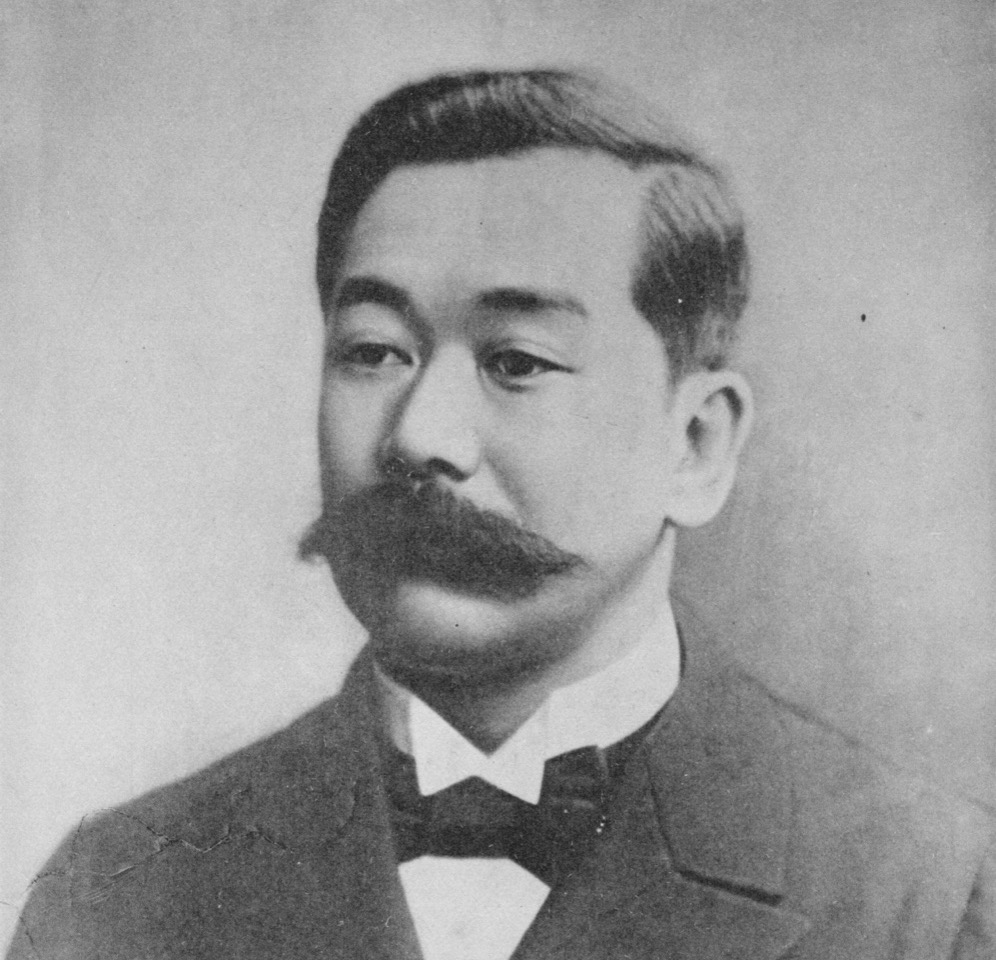
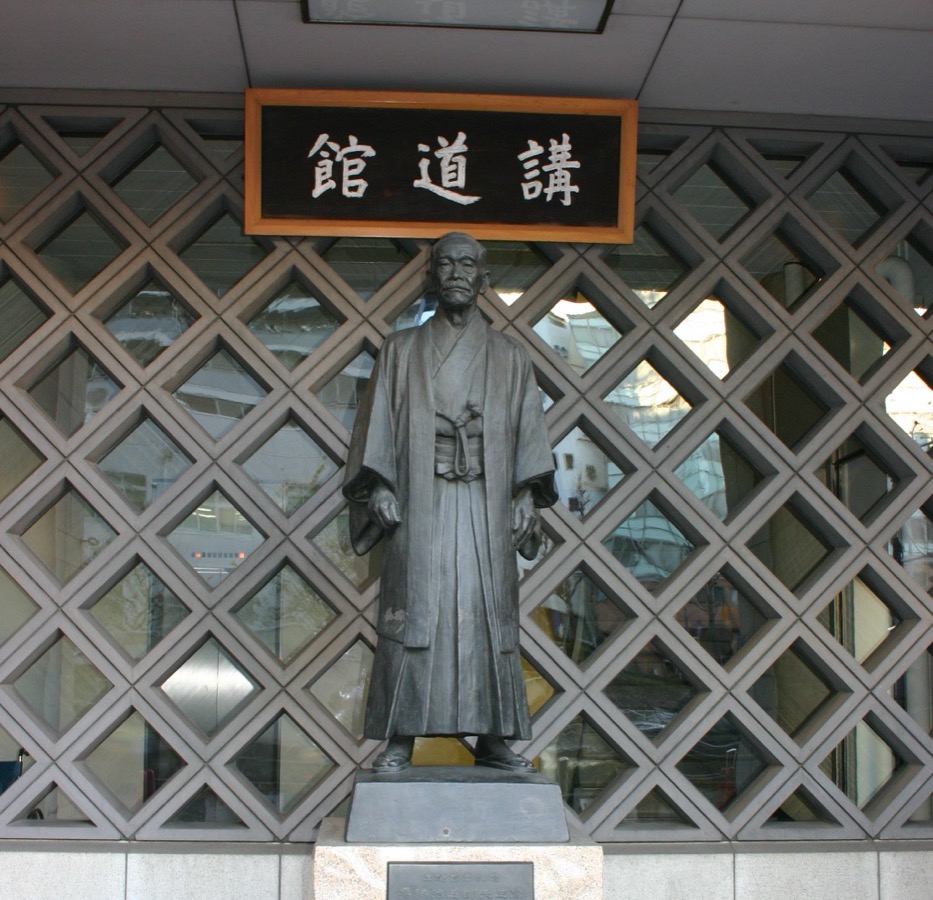
Dr. Jigoro Kano
An educator who studied several schools of jujutsu and founded judo in Tokyo in 1882.
Judo (柔道) means "the gentle way." It's an Olympic martial art and a way of training body and mind.
An educator who studied several schools of jujutsu and founded judo in Tokyo in 1882.
Judo is about balance, leverage and timing. A match is won by a clean throw, a pin or a submission, never a punch or kick.
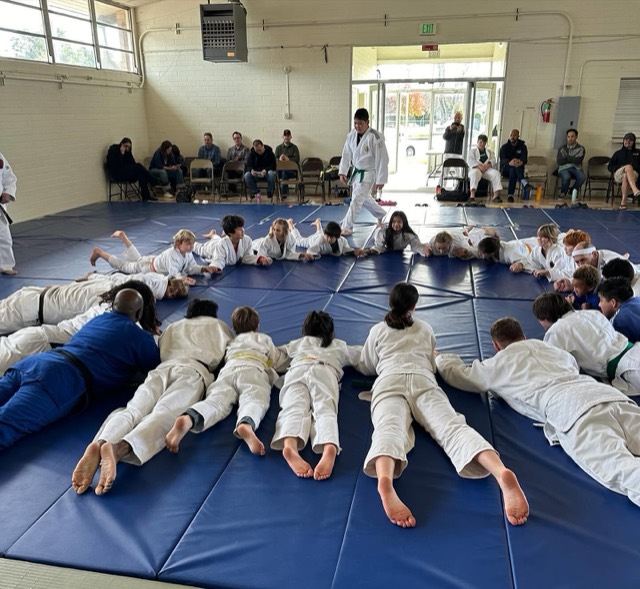
Falling and rolling safely. The first thing every student learns.
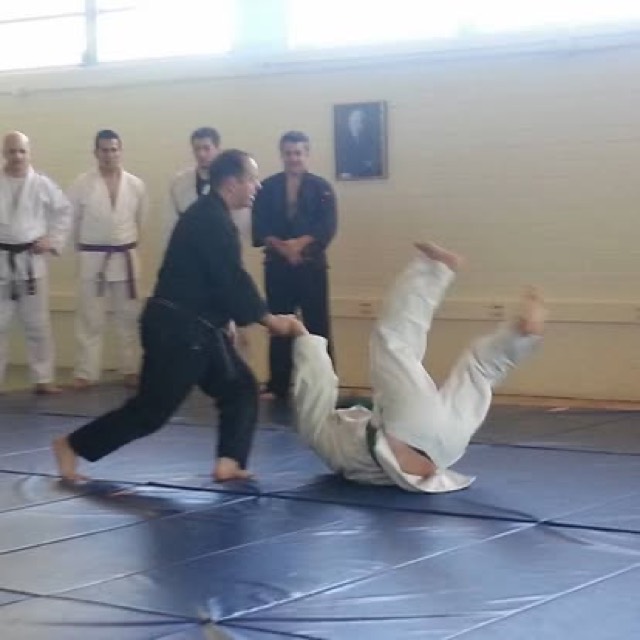
Throwing: hip throws, foot sweeps and shoulder throws.
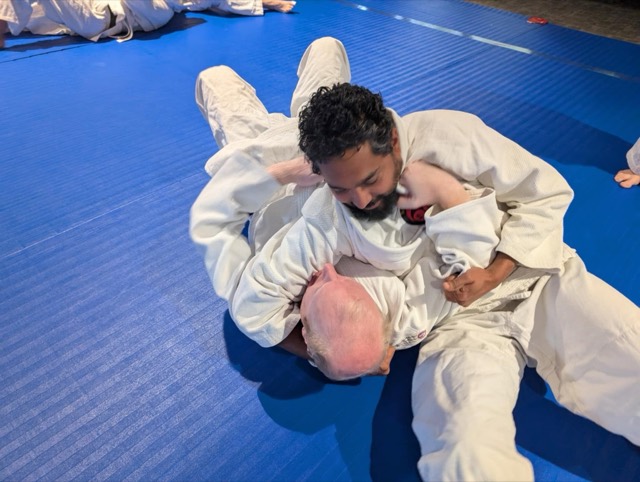
Grappling on the ground: pins and, at the ages tournament rules allow, chokes and arm-locks.
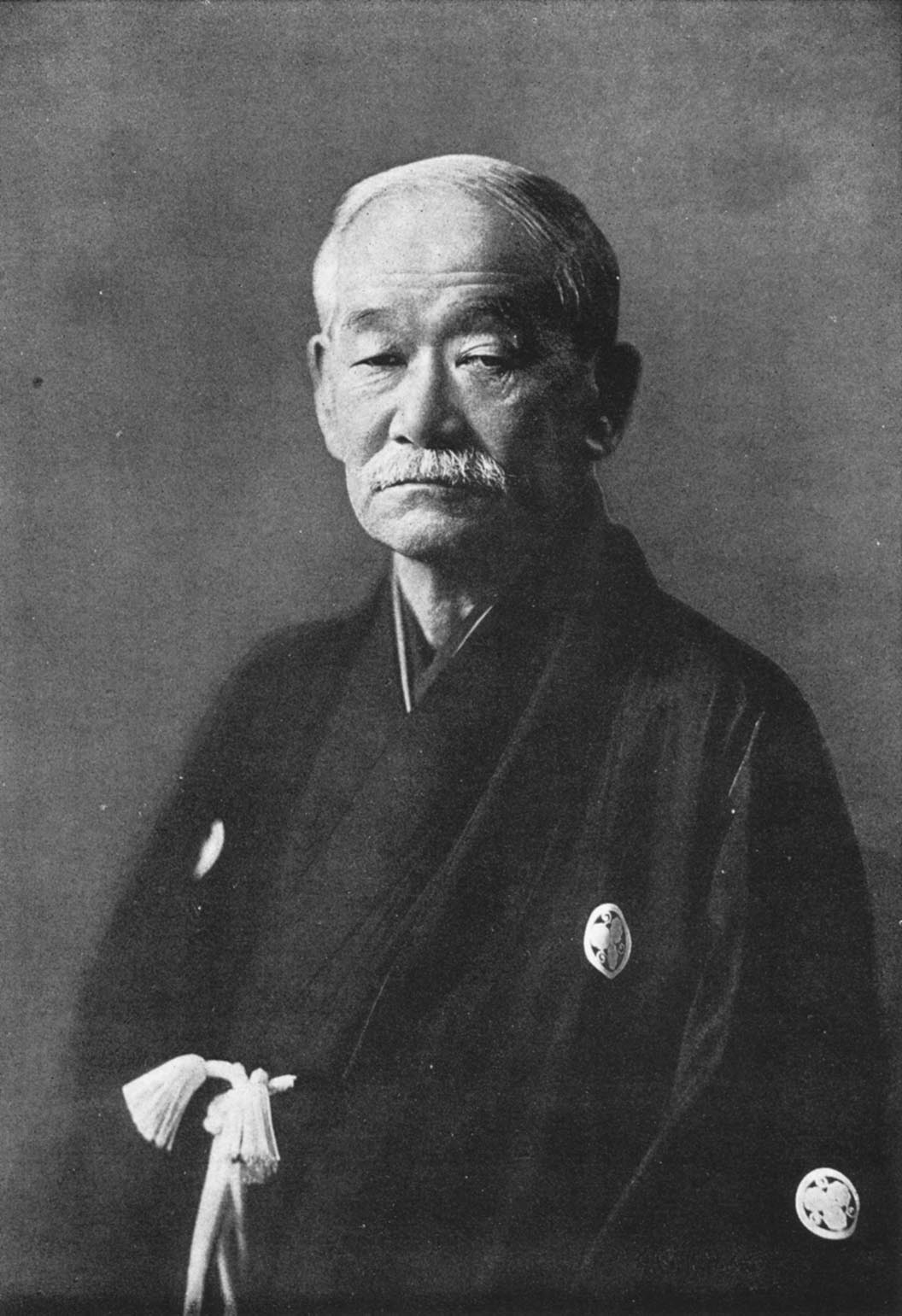
Founder of judo, 1860 to 1938
Kano was born in 1860 in Mikage, now part of Kobe. He was still a small child when the samurai era ended in 1868 and the old jujutsu schools began to fade. His family moved to Tokyo when he was a boy. He was small for his age and often bullied at school, so he went looking for a jujutsu teacher.
Around 1877, as a student at Tokyo Imperial University, he began Tenjin Shin'yo-ryu jujutsu under Hachinosuke Fukuda. When Fukuda died he went on with Masatomo Iso, and later with Tsunetoshi Iikubo of the Kito-ryu. One school was strong in holds and locks, the other in throws.
In 1882, at 21, he opened the Kodokan in a twelve-mat room at Eisho-ji, a Tokyo temple, with only a handful of students. He kept what worked and took the most dangerous techniques out of free practice, so people could train hard without getting hurt. Those techniques stayed in kata, the prearranged forms. Randori, free practice with a resisting partner, became the center of training.
Judo was never his only work. He began teaching at the Gakushuin, the Peers' School, that same year, and became one of Japan's great education reformers. Over three terms between 1893 and 1920 he led the Tokyo Higher Normal School, which trained teachers, for 23 years in all. He died at sea in 1938, on his way home from an IOC meeting in Cairo.
One changed syllable carries Kano's whole idea: martial technique became a safe, benevolent path for personal growth.
道
Do, the way
The two words start with the same character, 柔, which means gentleness or giving way. The difference is in the second one. Jutsu (術) is a technique, and jujutsu was a set of skills for fighting. Do (道) is a way, written with the same character as the Chinese dao.
Kano didn't invent the word judo. At least one older jujutsu school had used it, and at first people called his own teaching Kano jujutsu. What he gave the word was a new weight. Speaking at the University of Southern California in 1932, he said jujutsu was the art of giving way in order to win, and judo was the way, or principle, behind it.
That principle was the most efficient use of mind and body. Apply it to attack and defense, Kano explained, and you have jujutsu. Apply it to your health, your mind, your character and the way you live and work, and you have judo. A throw is still a throw. The reason for learning it is what changed.
In 1922 Kano made these two phrases the mottoes of the Kodokan Cultural Society. Everything in judo, from a single throw to how you treat a partner, comes back to them.
精力善用
Seiryoku Zenyo
Use the least strength necessary, and let timing do the work.
自他共栄
Jita Kyoei
You can't learn alone, so you look after your partner.
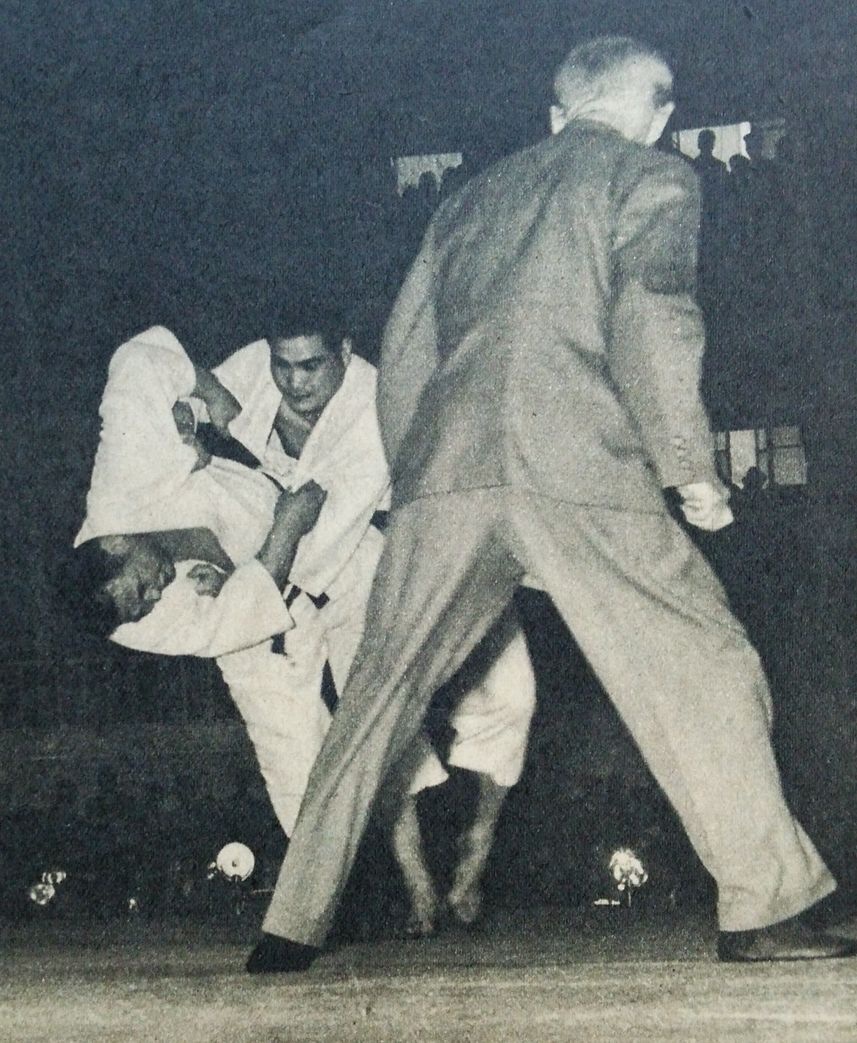
The 1953 All-Japan final, refereed by Kyuzo Mifune. Photo: Asahi Graph.
What Kano built it for
In 1889 Kano set out three aims for judo: physical education, contest, and training the mind and character. Winning was only one part. He wanted what you learn in the dojo to carry into school, work and family.
We teach it the same way in Petaluma. We bow to our partners, throw so they land safely, and let go the moment they tap.
"Bowing is an expression of gratitude and respect."Dr. Jigoro Kano
Judo was one part of a career spent training teachers and opening Japan to the world.
He trained Japan's teachers
The school he led for 23 years is a forerunner of the University of Tsukuba.
He opened a school for students from China
Thousands studied at his Kobun Gakuin, including the writer Lu Xun.
He brought Asia into the Olympic movement
As the first Asian IOC member, he led Japan to its first Games in 1912.
Its throws and groundwork are still part of wrestling, sambo, BJJ and MMA training.
Kano welcomed karate to the Kodokan
He invited Gichin Funakoshi to demonstrate there in 1922.
Karate's uniform came from judo
Gichin Funakoshi modeled it on Kano's gi.
Dan ranks started in judo
Kano created them in the 1880s. Karate adopted them in 1924.
Kano sent students to aikido's founder
After watching Morihei Ueshiba in 1930, he sent Kodokan students to train with him.
Brazilian jiu-jitsu grew out of judo
Kodokan judoka Mitsuyo Maeda settled in Brazil in 1914 and taught Carlos Gracie.
Sambo has judo roots
Vasili Oshchepkov earned his black belt at the Kodokan, then helped create sambo in the Soviet Union.
Judo players have made their name in MMA
Olympic medalist Ronda Rousey became the UFC's first women's bantamweight champion.
A fiercely competitive Olympic sport
About 200 national federations belong to the International Judo Federation.
Kodokan judoka began teaching abroad in the 1900s. Kano spent decades carrying judo overseas.
1909
Kano becomes the first Asian member of the IOC.
1951
The International Judo Federation is founded.
1964
Judo debuts at the Tokyo Olympics.
1992
Women's judo becomes a medal sport in Barcelona.
Historic photos are in the public domain, via Wikimedia Commons.
The ones we hear most from people new to the art.
They're close relatives. Judo and Brazilian jiu-jitsu share roots, and many of the same pins, chokes and arm-locks. Judo puts more emphasis on throws, BJJ on the ground.
Karate is a striking art. Judo is a grappling art: you throw, pin and control a partner, with no punches or kicks.
Yes. You learn to fall safely, stay on your feet, and control someone without striking them, and you practise against people who are really resisting.
No. Our students start at 6 and keep going for life. Everyone trains to their ability, and nobody is pushed into anything unfamiliar.
Both. We teach traditional judo to USJF and Kodokan standards, including etiquette and Japanese terms. Competition is encouraged and never required.
There's no fixed timetable. Rank is earned on the mat, and promotion follows USJF and CENCO standards.
We bow to our partners before and after practice, out of respect and gratitude.