Judo for kids

For ages 6 to 17. Kids learn to fall safely, protect themselves and look out for each other.

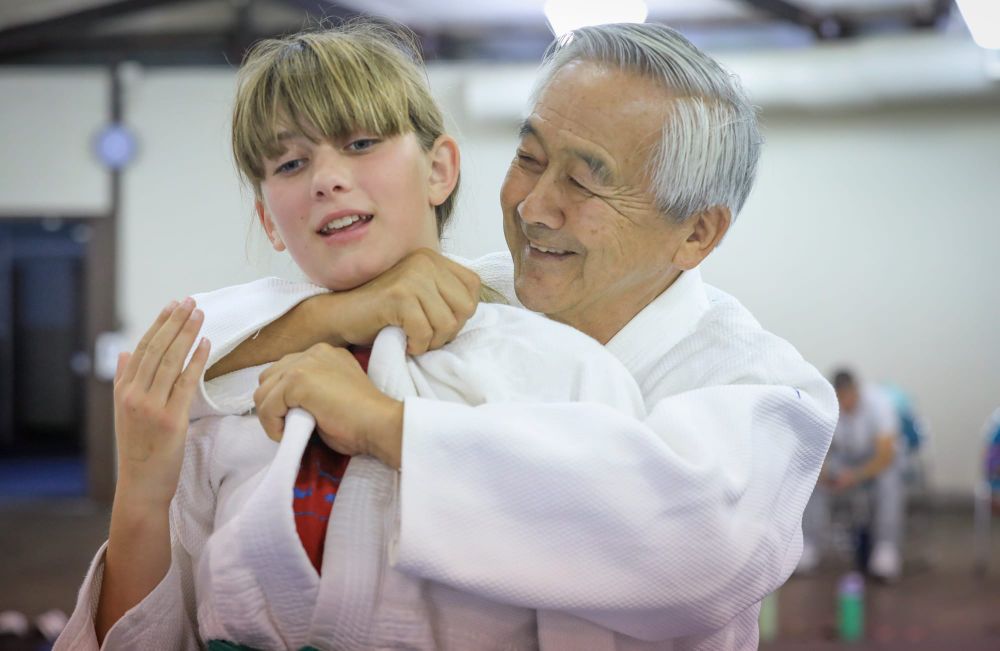
A young student in a white gi grinning as Sensei Henry, also smiling, demonstrates a hold with the student's arm around his neck

What your child learns.

Skills they can actually use, and a community to use them in.

  • Fall safely

    The first thing we teach, and useful for life.

  • Protect themselves

    Practical self-defense: throws, holds and escapes that really work.

  • Defuse a conflict

    How to calm things down before anyone gets hurt.

  • Show respect

    Bowing, listening and life skills that go home with them.

  • Join a community

    Friends, mentors and families who look out for each other.

  • Learn real Japanese

    Japanese terms and philosophy, straight from judo's roots.

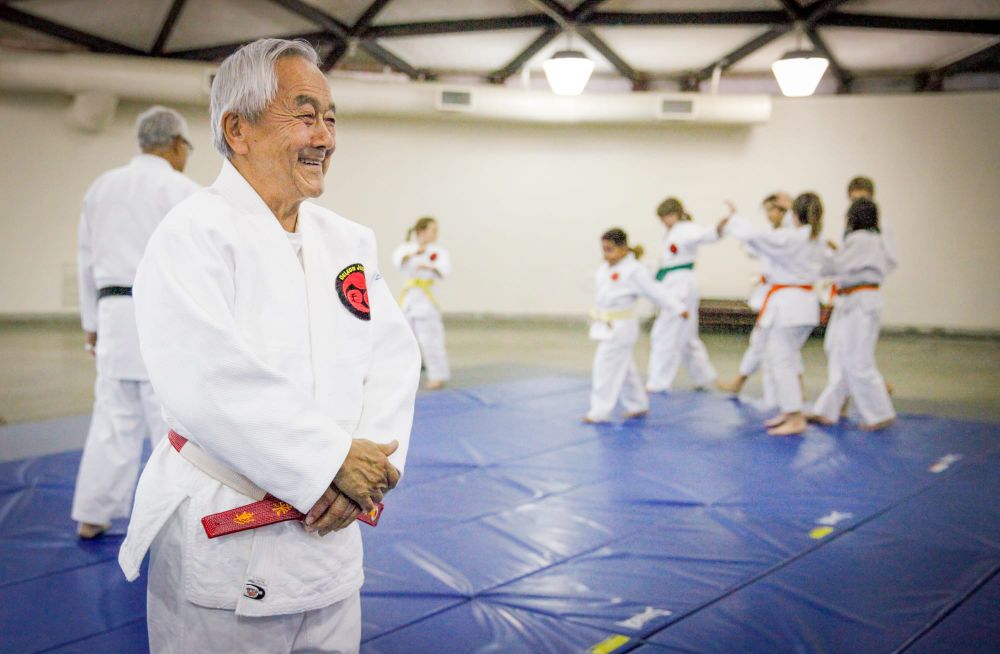
Sensei Henry smiling on the blue mats while young students practise together across the hall behind him

Why judo suits kids.

It rewards balance and care more than size.

Judo has no punching or kicking. The goal is to throw, pin and control a partner with balance and leverage, so the biggest kid in the room doesn't automatically win. That's why it suits children of every size and temperament. The first skill they learn is how to fall safely, and that stays useful on and off the mat.

It also takes a partner. You can't learn judo alone, so your child spends every class looking after someone else. They bow to their partner before and after practice, and they learn to throw with care because that partner is about to do the same for them. This is what we mean by respect, and it goes home with them.

Nobody has to be athletic or tough to start.

Most of our students begin with no martial arts experience at all. Kids train to their own ability, and we work with what they bring, including children with disabilities. Nobody is expected to walk into something unfamiliar before they're ready. Along the way it's a lot of fun.
How each age trains

Parents and kids train together on the same mat, and each age group trains differently.

  • 6–12

    Safe falling, balance and first throws, at a pace that stays fun. No chokes or armlocks.

  • 13–17

    Deeper technique and randori. Chokes and armlocks come in once students reach the age the rules allow.

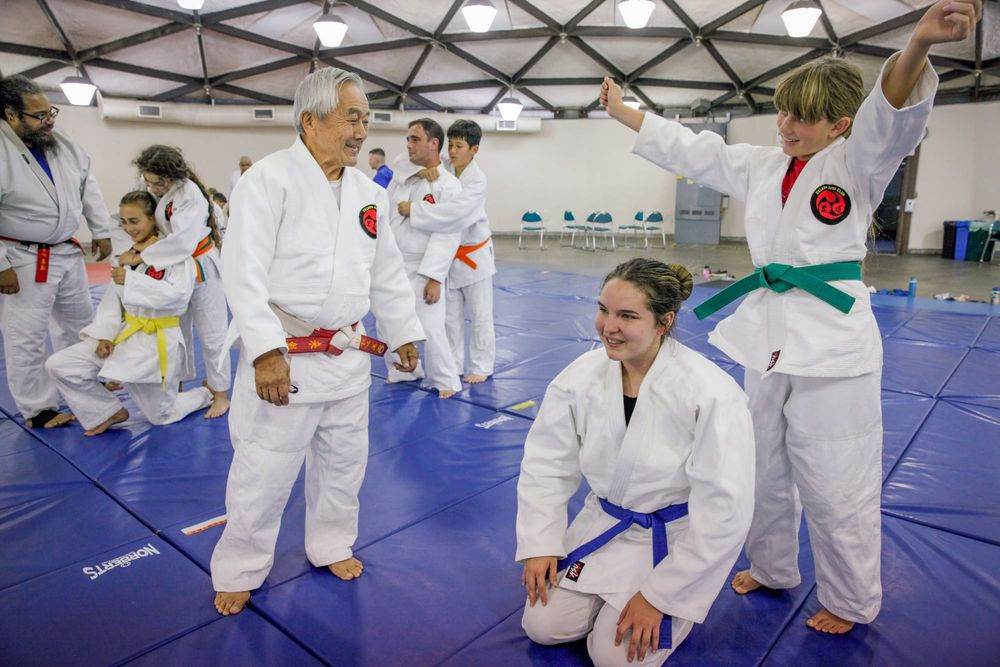
Sensei Henry laughing on the blue mats with a student in a green belt, arm raised, and a student in a blue belt kneeling beside them

Kids here mentor kids.

Judo's founder, Jigoro Kano, taught jita kyoei 自他共栄, that we grow by helping each other. In a class where kids, teens and adults train together, that's how the room works. The older students look out for the younger ones, and experienced kids help newer ones learn.

A senior student is called a senpai, and your child will hear the word on the mat. An older student helping a beginner has to slow down and think about what the other kid needs. Teaching someone else is how they become leaders.

We've seen where this leads. Sensei Davin Tillman started in this dojo in 1992, at age 5. Today he's our assistant head instructor, and others have followed the same path from white belt to teaching.

Belts and rank

Nobody here gets a black belt just for participating. Promotion follows USJF standards with no fixed timetable, and kids who never compete work through the same curriculum. Rank earned here counts anywhere.

Safety comes first.

Judo is a contact sport, so kids learn to fall before they learn to throw. There's no striking or kicking at any age, and chokes and armlocks wait until the rules allow them. Several instructors are on the mat, led by accredited black belts, all SafeSport certified and concussion trained.

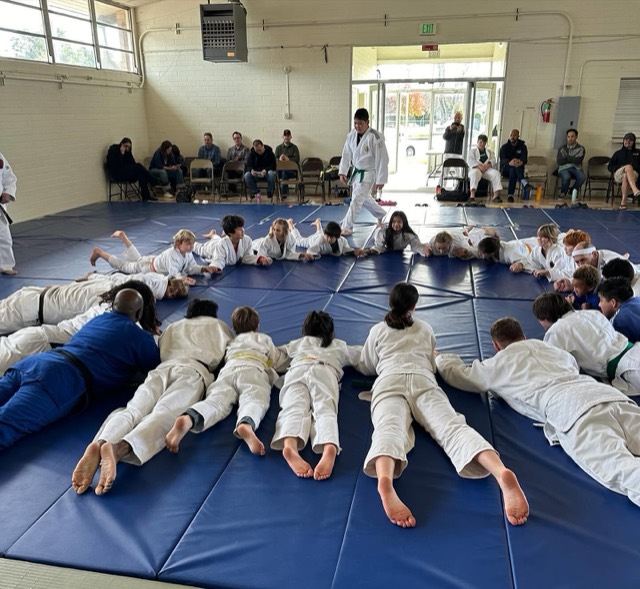
  1. Students lying on a blue mat in a circle, practising a breakfall

    Learn to fall.

    New students work with an instructor on falling before anyone throws them.

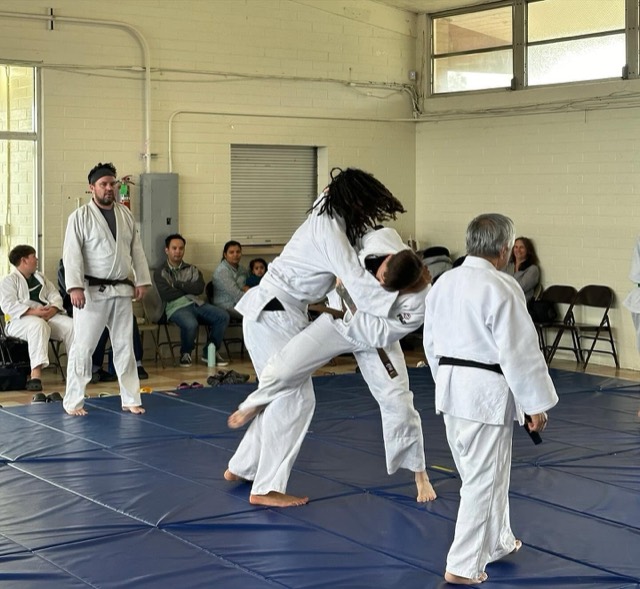
  2. Two judoka practising a throw on a blue mat while black belts watch

    Practice with a partner.

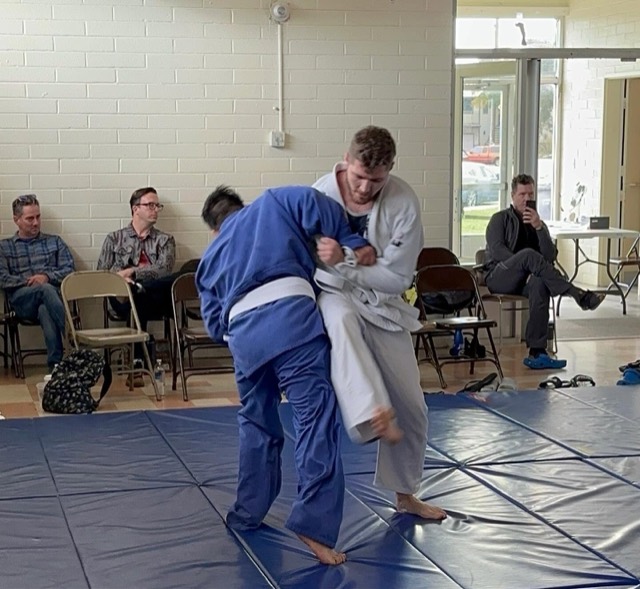
    We pair kids by size and experience, and they go through techniques slowly.

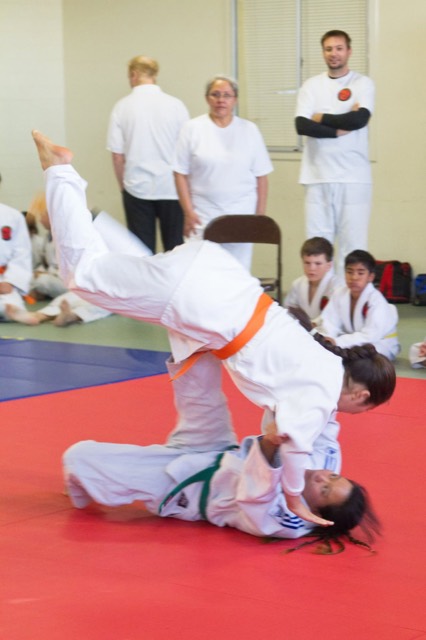
  3. A student in an orange belt throwing a partner in a green belt on a red mat as others watch

    Free practice when ready.

    Randori comes in gradually, and only when a student is ready for it.

Benefits beyond the mat

Judo keeps kids healthy, and it carries over to whatever else they love.

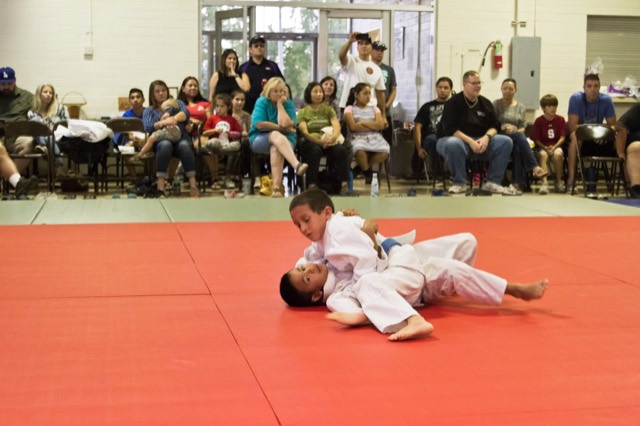
  • Two young judoka grappling on a red mat in front of a crowd

    An Olympic sport

    USA Judo is the pathway. Competition is safe, optional and encouraged.

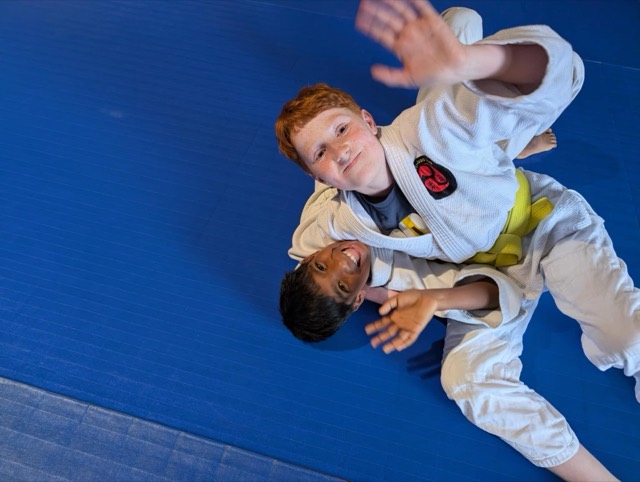
  • Two young judoka smiling up at the camera from a pin on a blue mat

    Healthy for life

    Strength, balance and fitness, in a sport they can keep for years.

  • Two judoka gripping on a blue mat while families watch from chairs

    Better at other sports

    Pairs well with wrestling, and shares its groundwork with BJJ.

Your child's first class.

You're welcome to watch from the sidelines the whole time, and your child doesn't need a gi yet. If they enjoy it, register through Petaluma Parks & Recreation, and ask about family discounts.

  1. Come by at 5:30 pm

    Any Tuesday or Thursday. No appointment needed.

  2. Wear athletic clothes

    Sweatpants and a t-shirt with no zippers. Trim nails, skip jewelry, bring water and flip-flops.

  3. Bow, warm up, learn to fall

    Most kids learn their first throw and pin that same day.

Questions from parents.

Ask us anything before or after class, too.

Is judo safe for my child?

Yes. Every student learns to fall before anyone is thrown, there's no striking or kicking, and classes are led by black belts who are SafeSport certified and concussion trained.

Can we watch before signing up?

Please do. Come by any Tuesday or Thursday at 5:30 pm. For a first class, wear sweatpants and a t-shirt with no zippers or metal, skip the jewelry, and bring water and flip-flops.

Can parents train too?

Yes. Parents and kids train together here, and plenty of families are on the mat at the same time. You're just as welcome to watch from the sidelines.

Does my child have to compete?

No. Competition is optional, and students can earn promotions without it. We do encourage it for their development, and we'll make sure they're ready first.

When do kids learn chokes and armlocks?

Not until they reach the age the rules allow. Younger children focus on falling, throws and pins. Ask a sensei and we'll walk you through it.

Should my kid do judo or BJJ?

They're close relatives. Brazilian jiu-jitsu grew out of judo, and the groundwork and submissions are similar. Judo adds throws and safe falling, so if you're comparing BJJ for kids, come try a class.

How do we sign up?

Register through Petaluma Parks & Recreation by searching for "Judo." Family discounts are available, and we'll help you find a gi when your child is ready.

Bring your kid to watch a class.

Parents are always welcome on the sidelines, Tuesdays and Thursdays at 5:30 pm.